Is It Worth Putting In a Water Softener in Grand Prairie?
A softener solves one specific problem very well, so the real question is whether that problem is the one in your home.
Is it worth putting in a water softener?
A water softener is worth it when a test shows your water is hard enough to leave scale on fixtures, appliances and your water heater. If your water is only mildly hard, or your real complaint is taste or smell, a softener won't fix it. Test first, then decide. Book a water test: (972) 945-8548
What a water softener actually does
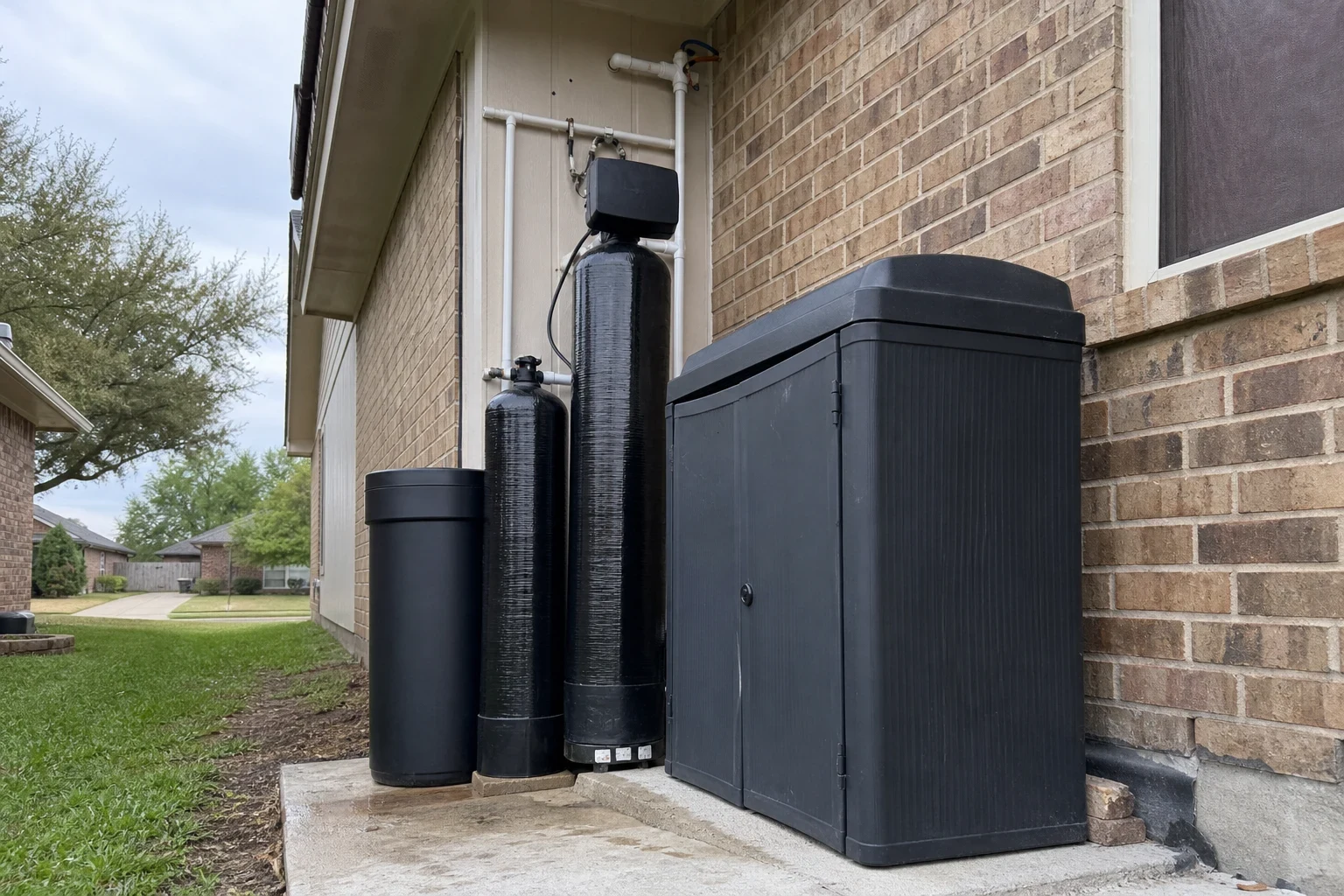
A softener removes the minerals that make water hard, mainly calcium and magnesium. Inside the tank, a bed of resin beads trades those minerals for sodium or potassium as water passes through. Every so often the system rinses the beads with brine from the salt tank so they can keep working.
That is all it does, and it does it well. A softener does not remove chlorine taste, it does not address lead from old plumbing, and it does not treat bacteria. Those jobs belong to other equipment, such as whole-home filtration for chlorine taste and odor, reverse osmosis for drinking water, or UV water treatment for microbial concerns.
This matters because many people buy a softener hoping it will make their water taste better. It usually won't, and that is a frustrating way to spend money.
Signs your home may have hard water
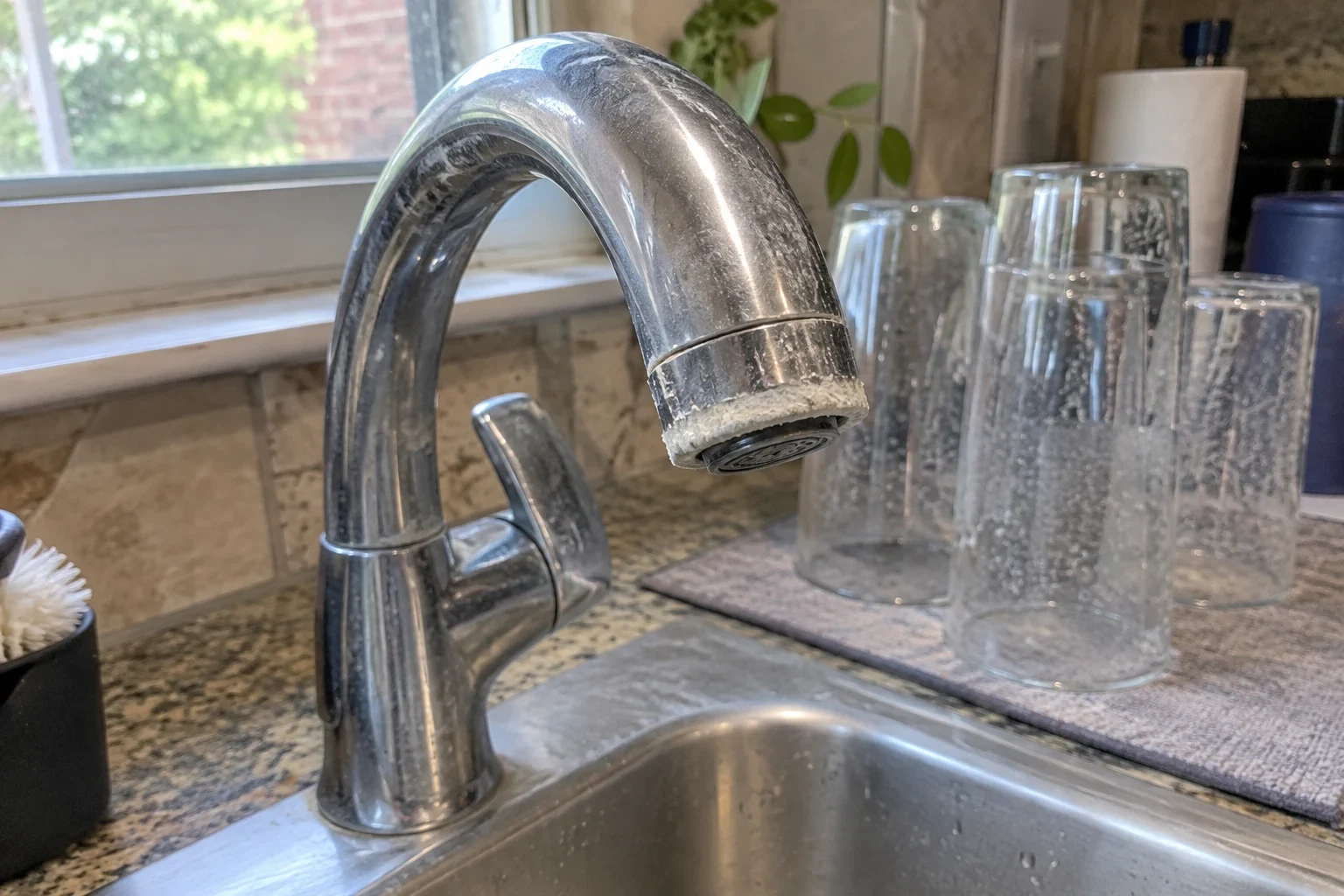
Hard water leaves evidence. The minerals come out of solution when water is heated or evaporates, so you tend to see it where water sits or gets hot.
- White or chalky crust around faucets and showerheads
- Cloudy spots on glasses and dishes after they dry
- Soap and shampoo that don't lather well
- Scale building up inside a kettle or coffee maker
- A rumbling or popping water heater, which can mean sediment and scale at the bottom of the tank
- Shower glass that turns hazy again soon after cleaning
Why the signs alone can mislead you
Some of those symptoms have other causes. Spotty dishes can come from the detergent or rinse setting. A popping water heater may simply be overdue for a flush. A chemical smell is usually chlorine from the city's disinfection, not hardness.
City water can also vary over the year as supply conditions shift, so what you noticed one summer may not match what comes out of the tap in winter. That is why we would rather measure than guess. A hardness number, along with a look at your other concerns, tells you whether a softener is the right tool or whether something else will do more for your home.
When a softener is worth the investment
A softener earns its keep when the test shows meaningful hardness and you are seeing the effects. Scale shortens the life of water heaters, clogs aerators and showerheads, and builds up inside dishwashers and washing machines. Softening slows that wear and cuts down on cleaning.
It is a weaker choice when your water tests only mildly hard. In that case you would be adding salt, maintenance and equipment for a small benefit. We will tell you that plainly if the numbers point that way.
- Worth a close look: measured hardness that is moderate or higher, visible scale, a tankless water heater you want to protect
- Probably not worth it: low hardness, or a main complaint about taste, smell or drinking water quality
What to weigh before you decide
Owning a softener means a few ongoing tasks. You will refill the salt tank on a regular schedule, and the unit needs a drain line and power where it sits. Many homes in the area keep the water heater in the garage, which often makes the garage a practical spot for a softener too.
Softened water picks up a small amount of sodium. Most people never notice, but if you or someone in your home watches sodium closely, pairing a softener with reverse osmosis at the kitchen sink keeps drinking and cooking water low in sodium.
What moves the cost of a project comes down to the size of the system your household needs, how easy it is to tie into your main water line, whether a bypass and drain are already in place, and whether you add other equipment at the same time. We go over each of those in a quote by phone so nothing comes as a surprise.
How we help you decide
We start by testing the water at your home and walking you through a written report of what we found, so you can see your hardness and other results in plain numbers. Then we match the equipment to those results, not to what sells best.
If a softener is the right fit, we size it to your water and your household. If whole-home filtration or reverse osmosis would solve your real problem better, we say so. For qualifying homes, standard professional installation is included.
More questions about water softeners
Something not covered here? (972) 945-8548
Does softened water taste salty?
Not usually. A softener adds a small amount of sodium, but most people can't taste it. If you prefer, a reverse osmosis system at the kitchen sink gives you low-sodium water for drinking and cooking.
Will a softener get rid of the chlorine smell?
No. Chlorine taste and odor are handled by carbon filtration, often as part of a whole-home filtration system. Some homes pair the two.
How much upkeep does a softener need?
Mostly topping off the salt tank. Every so often it is worth checking for a salt bridge, a hard crust that can form in the brine tank and stop the system from regenerating.
Can I skip the test and just buy one?
You can, but you risk paying for a system you don't need or one sized wrong for your water. A test takes the guesswork out of it.
Find out what your water really needs
One phone call sets up a water test at your home. We'll go over your results with you, give you a straight answer on whether a softener makes sense, and walk you through a quote by phone if it does.