ServicesWater Softeners
Water Softeners in Grand Prairie, Sized From a Hardness Reading
Crusty faucets and spotted glasses usually point to hard water, but not always. We measure your hardness and a few other readings in your home first, then tell you plainly whether a softener will fix what you are seeing and what size makes sense.
How a Softener Works, and When You Need One
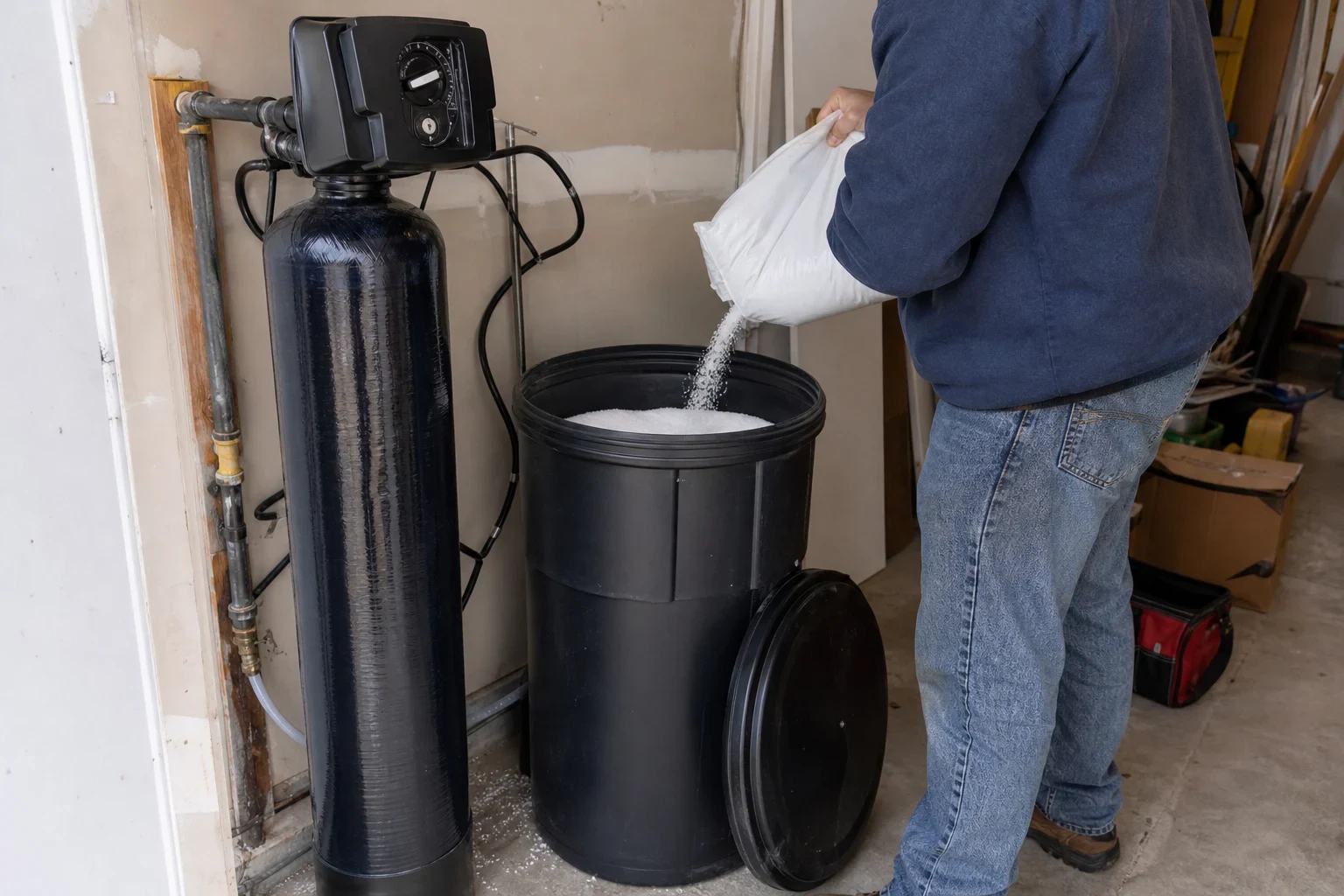
Hard water gets its hardness from calcium and magnesium, and a softener pulls those out. Resin beads in the tank swap the minerals for sodium or potassium. Once the beads are full, brine from the salt tank rinses them clean and the cycle begins again. You end up with less scale on fixtures, in the water heater and in the dishwasher.
It is not a filter. Chlorine taste stays the same, and most other things people notice in their water are left alone too. So we test before recommending one. When hardness turns out to be the cause, a softener is money well spent. When something else is behind the spots or taste, we tell you and steer you to whole-home filtration or reverse osmosis.
What Comes With Your Softener Install
- Readings taken in your home
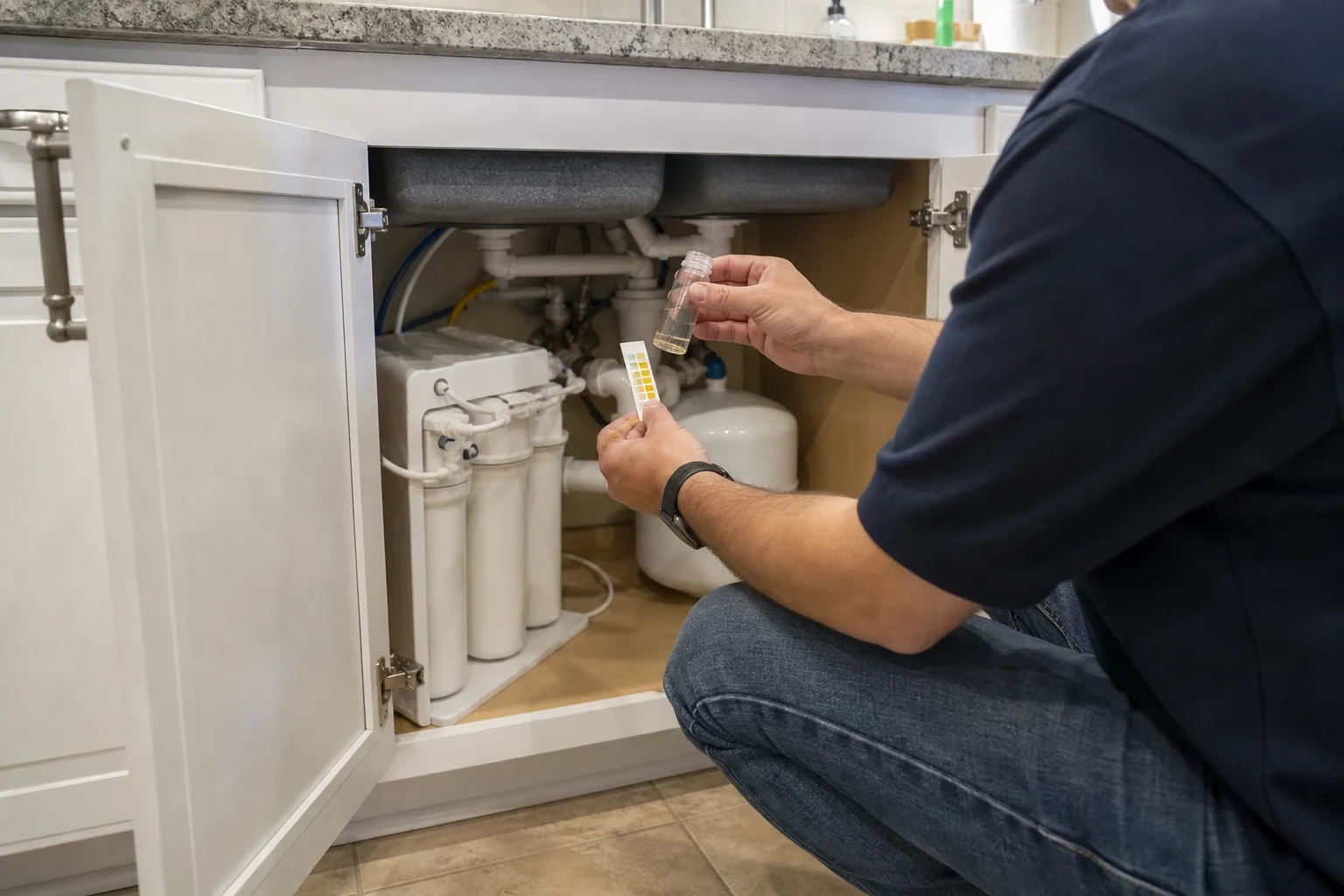
- We measure hardness in grains per gallon, plus iron and a few related numbers. Iron can clog the resin, so it changes the setup we suggest.
- A tank sized for your family
- Tank size comes from your hardness and the number of people at home. Too small and it regenerates nonstop and eats salt. Too large and you pay for capacity that sits unused.
- Metered valve programming
- The valve is set to regenerate by how much water you use rather than on a calendar, so it spends only the salt and rinse water it needs.
- Bypass, drain line and brine tank
- Every install gets a bypass, so the softener can be taken offline while faucets and toilets keep working. We also run the drain line, set the brine tank and add the first load of salt.
- A tour of the controls
- Before leaving, we show you how to add salt, work the bypass and read the valve screen, so you know what normal looks like and when to call us.
Signs Hard Water Is Showing Up at Home
White crust on fixtures
A chalky, rough ring on faucets, showerheads and shower glass is the clue people see most when calcium and magnesium run through the pipes.
Soap that barely suds
Hard water works against soap and shampoo, so you use more and still get a film on skin, hair and the tub.
Spots and haze on dishes
Dishwasher spots may come from hardness, or from other dissolved solids a softener can't fix. Sorting out which is the job of the test.
A water heater that rumbles or lags
Popping or rumbling usually means scale has settled in the bottom of the tank. Heat then has to pass through that layer, which wastes energy and shortens the heater's life.
Appliances failing early
Mineral buildup chokes the small valves and lines in dishwashers, washers and coffee makers. If repair visits keep blaming scale, it's time to measure hardness.
What Affects the Cost of a Water Softener
Softener pricing depends mostly on your water and your plumbing, which is why we quote after testing rather than before. For qualifying homes, our offer is simple: standard professional installation included. Here is what moves the number up or down.
Capacity your home needs
A high hardness reading and a busy house full of people call for a softener that can hold more minerals between cycles. That larger resin tank costs more up front but regenerates less often.
Plumbing access
Some homes have a ready softener loop where the main line enters. Others need new piping run to a workable spot, which adds time and materials.
Iron or other readings
If your test shows iron or a chlorine taste you also want gone, a pre-filter or a combined system may make sense. We only add it if your readings call for it.
Valve type and salt choice
Metered valves cost a bit more than timer valves but save salt over the years. Potassium costs more per bag than sodium if you prefer it.
How a Softener Job Goes, Start to Finish
- 1
A phone call about what you are noticing
Tell us what you see, which rooms it shows up in and roughly when it started. Then we pick a visit time that works around your day.
- 2
Testing at your tap
We take readings in your home and explain each number as we go. If hardness is low, we tell you a softener is not worth the money.
- 3
A clear recommendation
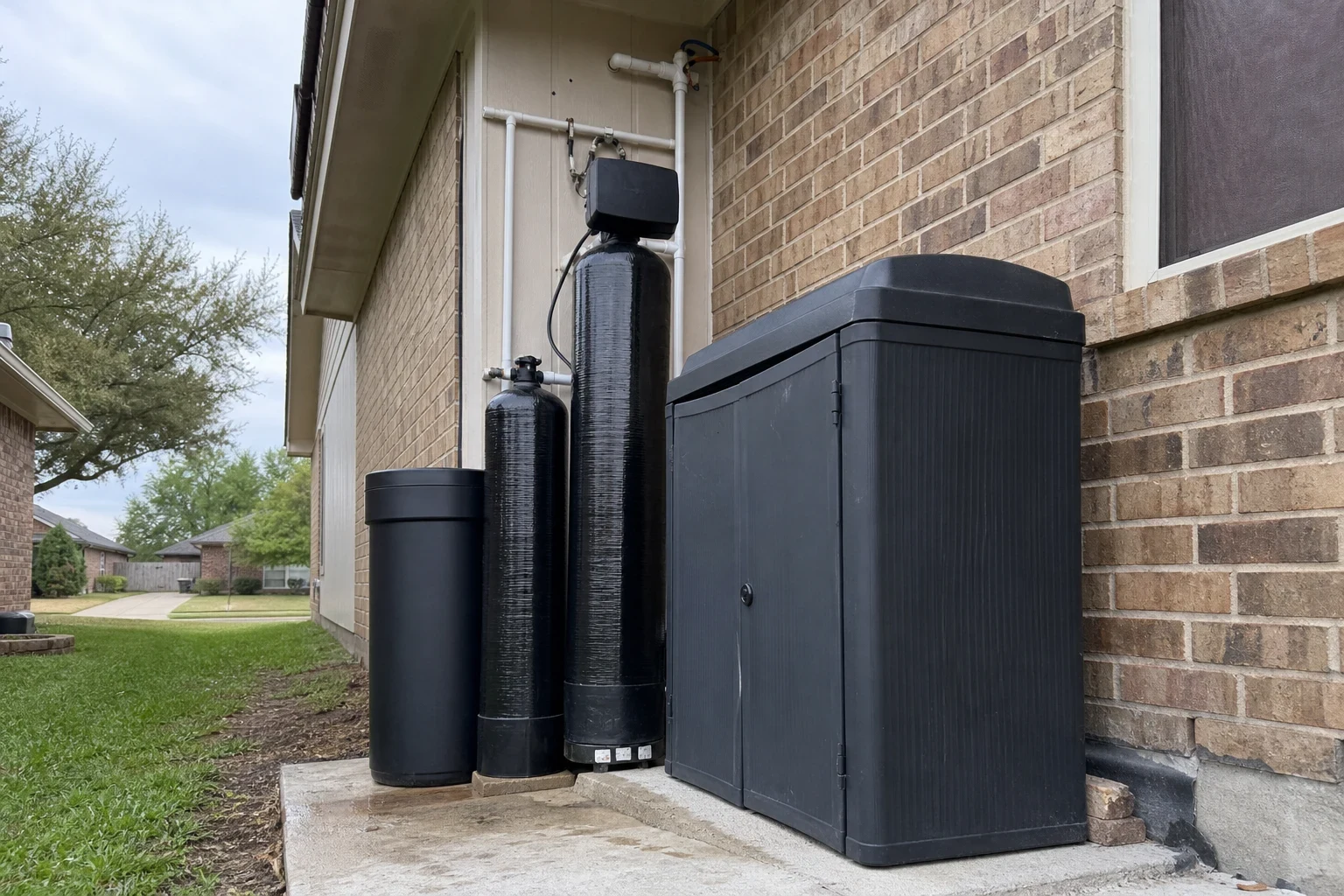
If a softener fits, we explain the size, the valve and where it would go, usually near where your main line enters, often in the garage. You get your quote by phone or in person before any work is scheduled.
- 4
Install day
We protect the work area, shut off the water, cut in the bypass and connect the softener and drain. Most installs are finished the same visit, and your water is back on before we go.
- 5
Check and cleanup
We run a regeneration cycle, check for leaks, test the softened water and clean up. Then we walk you through the controls.
Water Softener Questions We Hear Often
Does every home in Grand Prairie need a softener?
No. Hardness varies, and some homes have little reason for one. We measure your water first, and if the reading does not justify a softener, we tell you that plainly.
Will softened water taste salty?
Most people cannot taste it. The sodium added rises and falls with the mineral load coming into your home, so moderately hard water picks up only a small amount. If you are watching sodium, you can use potassium chloride in the brine tank or add reverse osmosis at the kitchen sink for drinking water.
Will a softener get rid of chlorine taste?
No. A softener only handles hardness minerals. Chlorine taste and odor are handled by carbon, which is what our whole-home filtration systems use. Some homes pair the two.
How often do I add salt?
It depends on hardness, household size and tank size. Many households top off the brine tank every month or two. We show you how to check the level so you never have to guess.
How much space does a softener need?
Plan on room for two tanks side by side, close to the main line, with a drain and an outlet nearby. We look at your space during the visit and suggest the best spot.
Can I go on vacation without worrying about it?
Yes. A metered valve only regenerates when water has been used, so it sits quietly while you are away. Just make sure the salt is topped off before you leave.
Find Out If Hard Water Is Really the Cause
We measure your hardness, walk you through what the numbers mean for your home and tell you honestly whether a softener will earn its keep. When one fits, you see a clear quote before anything is installed.