ServicesReverse Osmosis
Reverse Osmosis in Grand Prairie for Water You Want to Drink
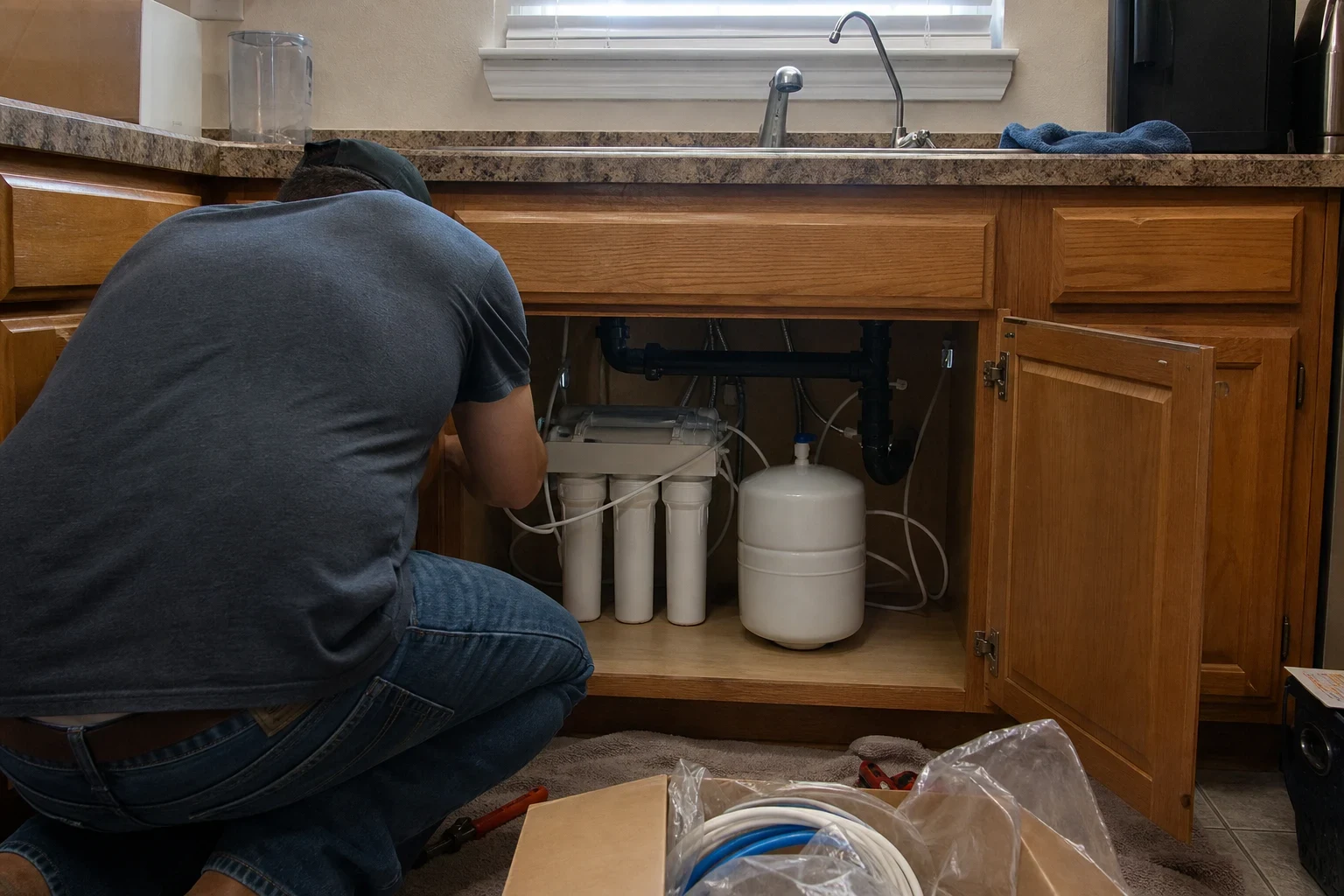
A reverse osmosis system sits under your kitchen sink and gives you clean drinking and cooking water from its own faucet. We start by testing your water, so you know whether RO is the right answer and which setup suits your home.
How Reverse Osmosis Works and Who It Suits
In a reverse osmosis system, water is forced through an extremely fine membrane that stops dissolved solids, many trace metals and lingering disinfectant taste. Carbon stages on either side of the membrane trap sediment and chlorine and clean up the flavor. The result is a ready supply of drinking water at your kitchen sink, and it can supply your refrigerator's ice maker as well.
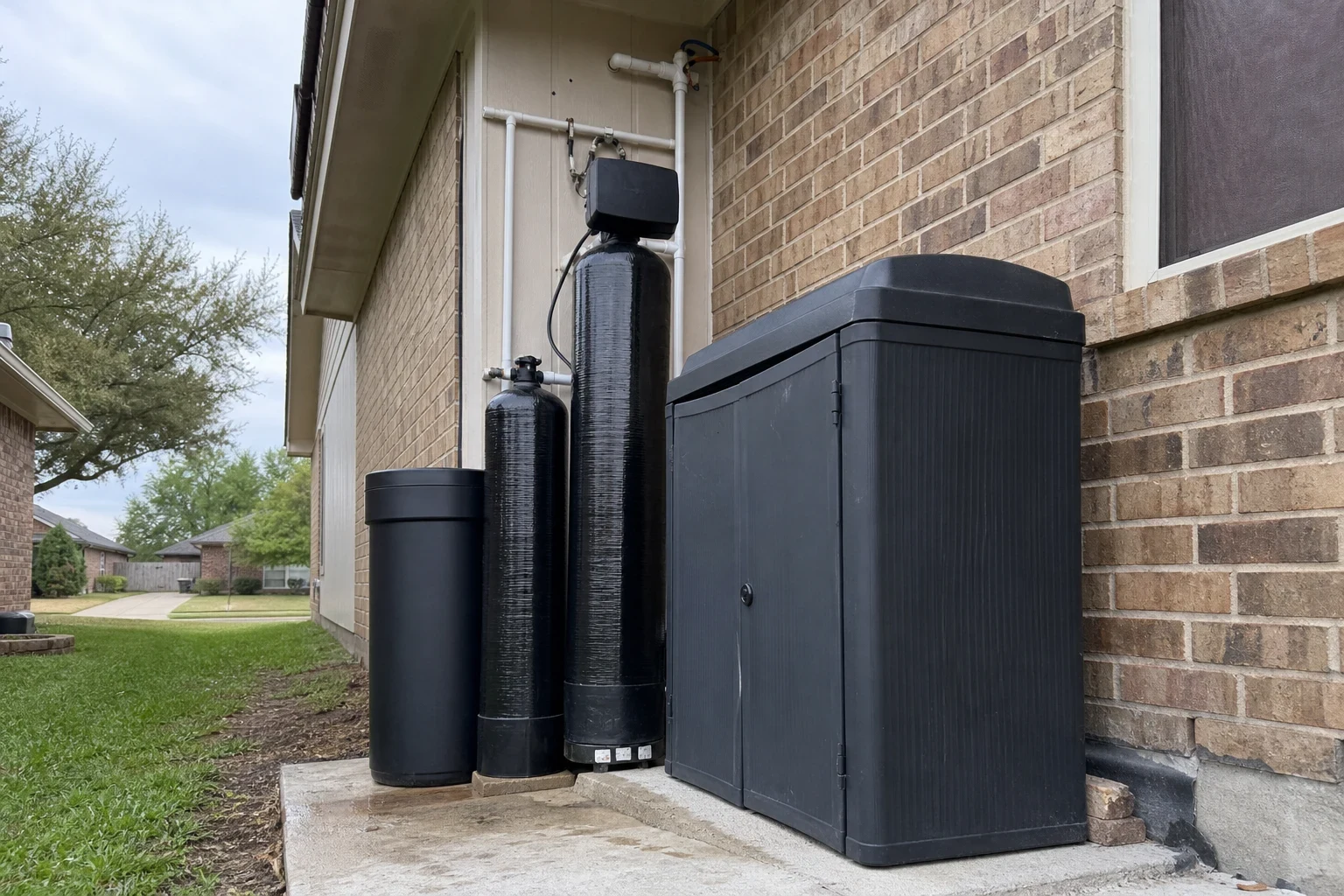
RO treats water at one tap, not the whole house. If chlorine odor bothers you in the shower and throughout the home, whole-home filtration may serve you better. If hardness would scale the membrane quickly, a water softener installed before it helps protect what you spent. So we review your test results first and tell you straight which option fits what you're noticing.
What Your RO Installation Includes
- Multi-stage system
- A sediment prefilter, carbon prefilter, RO membrane and carbon post-filter. We can add a remineralization stage if you prefer water that tastes less flat.
- Its own drinking faucet
- If your sink has a spare opening, like an old sprayer or soap dispenser spot, the RO faucet goes there. When there is no spare opening, we talk with you about your sink and counter material before cutting a neat new one.
- Proper drain connection
- RO sends a small stream of water to the drain while it filters. We connect it with a drain saddle and air gap so wastewater cannot back up into the system.
- Storage tank or tankless unit
- A compact pressurized tank tucks into the cabinet, or a tankless unit saves space where the disposal and trash pull-out already crowd things.
- Optional ice maker line
- We can run a line to your refrigerator so ice and chilled water come from the same filtered supply.
- Startup and walkthrough
- We flush the system, check for leaks and show you how filter changes work before we leave your kitchen tidy.
Signs an RO System Could Help Your Home
You buy a lot of bottled water
If the family skips the tap and hauls cases home from the store, an RO faucet usually replaces that habit.
Coffee, tea or ice taste off
A chlorine or mineral taste shows up most in hot drinks and ice. RO and its carbon stages take care of both at the kitchen sink.
Older plumbing in your home
In older houses, metals can come from pipes and fittings rather than the city supply. RO is a strong safeguard for the water you drink and cook with.
Cloudy ice or spotted glasses
High dissolved solids leave film and spots. Your test tells us whether that is minerals RO handles well, or hardness better treated across the whole house.
You want extra assurance
Some families simply want another layer of protection for babies, older relatives or a sensitive stomach. That is a perfectly good reason.
How We Handle Your RO Project
- 1
Test your water
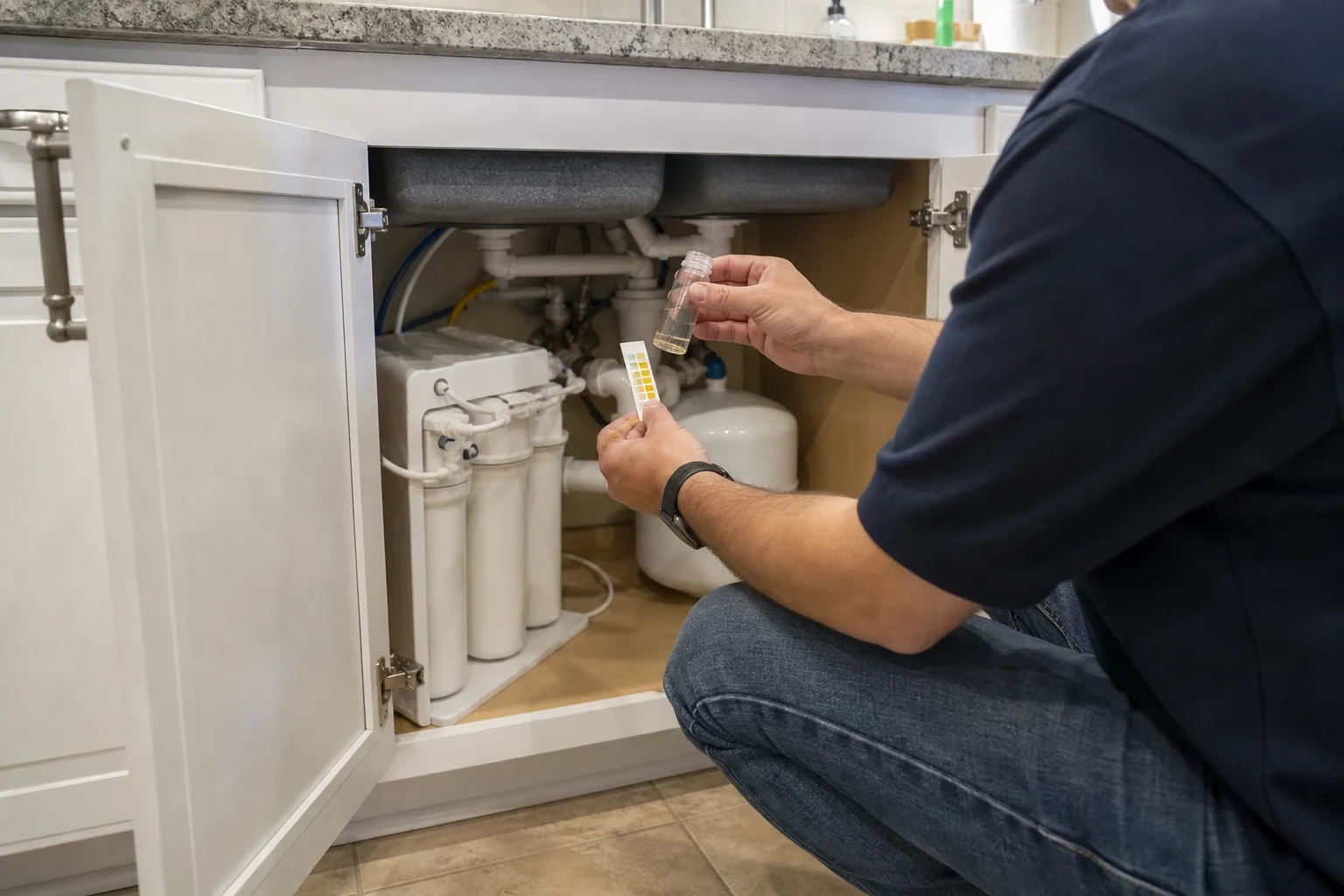
We check hardness, dissolved solids, chlorine and water pressure. These numbers decide whether RO fits and what stages it needs.
- 2
Walk through the results
We explain what we found in plain terms and give you an honest recommendation, even if that means a different system or nothing at all. You get a clear quote before any work is scheduled.
- 3
Install day
We protect the cabinet floor, fit the system, mount the faucet and connect the drain. Most kitchen installs take a few hours, and your water is shut off only briefly.
- 4
Flush, check and explain
We run the first tanks through to clear the new filters, look over every fitting for drips and show you where each filter sits and when it needs changing.
What Moves the Cost of Reverse Osmosis
Every kitchen is a little different, so the price depends on your water and your sink cabinet. Standard professional installation is included for qualifying homes. Your quote lists each part and step so nothing surprises you later.
- System style
- Tank systems and tankless units are priced differently, and added stages like remineralization raise the cost.
- Water conditions
- Low pressure may call for a booster pump. Hard water may mean pairing RO with a softener so the membrane lasts.
- Faucet placement
- A spare opening in the sink keeps the job quick. Cutting through granite or quartz calls for slower work and special bits, so it costs more than a laminate counter.
- Extra lines
- Running filtered water to a refrigerator or a second location adds tubing, fittings and labor.
- Ongoing filters
- Prefilters and post-filters need regular changes, and the membrane less often. We explain the schedule so you can plan for it.
Common Reverse Osmosis Questions
Something not covered here? (972) 945-8548
How much water does reverse osmosis waste?
Some water does go down the drain, carrying off what the membrane holds back. Current systems use far less than older models, and solid water pressure helps further. We measure your pressure during the test so the unit runs as efficiently as possible.
Does RO water taste flat?
RO strips out most minerals, so some people love the clean taste while others find it bland. A remineralization stage puts a small amount of calcium and magnesium back in. We'll help you decide which you'd like.
Can it fit under a sink that has a garbage disposal?
In most cases, yes. A slim tank or tankless unit works well in a crowded cabinet. We check your space before quoting and suggest a layout that fits.
How often are the filters replaced?
Sediment and carbon cartridges are typically changed once or twice a year. The membrane lasts far longer, often several years. Your water hardness and how much your household uses the faucet affect that schedule, and we'll tell you what to expect in your home.
Is RO or a whole-home filter the better choice?
That depends on what's bothering you. RO covers drinking and cooking water at a single tap, while whole-home filtration treats every faucet and shower. Many households only need one. Some use both, with the whole-home system covering showers and laundry and RO handling drinking water, and your test results tell us which route fits.
See Whether RO Suits Your Water
It starts with a water test. We go over the results with you, suggest reverse osmosis only if it truly fits, and give you a clear quote by phone before you decide anything.