ServicesUV Water Treatment
UV Water Treatment in Grand Prairie
UV light stops bacteria and viruses from multiplying in your water without adding chemicals or changing the taste. We look at your water and plumbing first, so the system we suggest is the right size and has the pre-treatment it needs to actually work.
What UV treatment handles and what it leaves alone
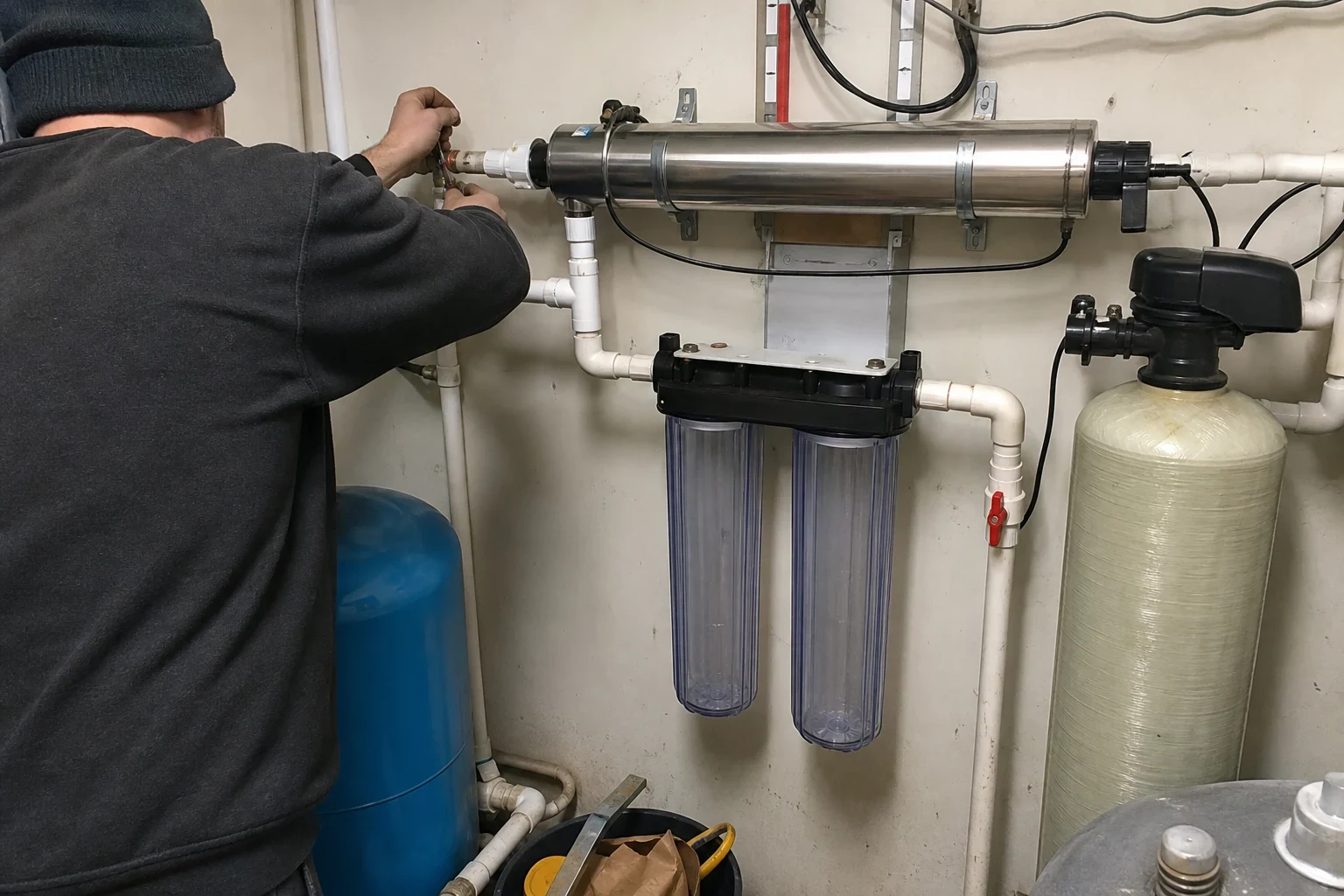
A UV system is a stainless steel chamber with a lamp inside a clear quartz sleeve. As water passes the lamp, the light damages the DNA of bacteria, viruses and cysts, leaving them unable to multiply. Nothing is added to the water, and its taste and smell don't change.
This matters. UV does not remove chlorine, hardness, sediment or lead, and cloudy water or scale on the sleeve stops it from doing its job. That's why we learn what your water is doing before recommending it. Sometimes UV is the answer. Other times whole-home filtration or reverse osmosis addresses your concern better, and we'll tell you.
For homes on city water, UV is mainly a backup layer, not a fix for something you can taste. Families often add it for someone with a weakened immune system, or to feel calmer when a boil water notice goes out.
What comes with a UV installation
- A look at your water first
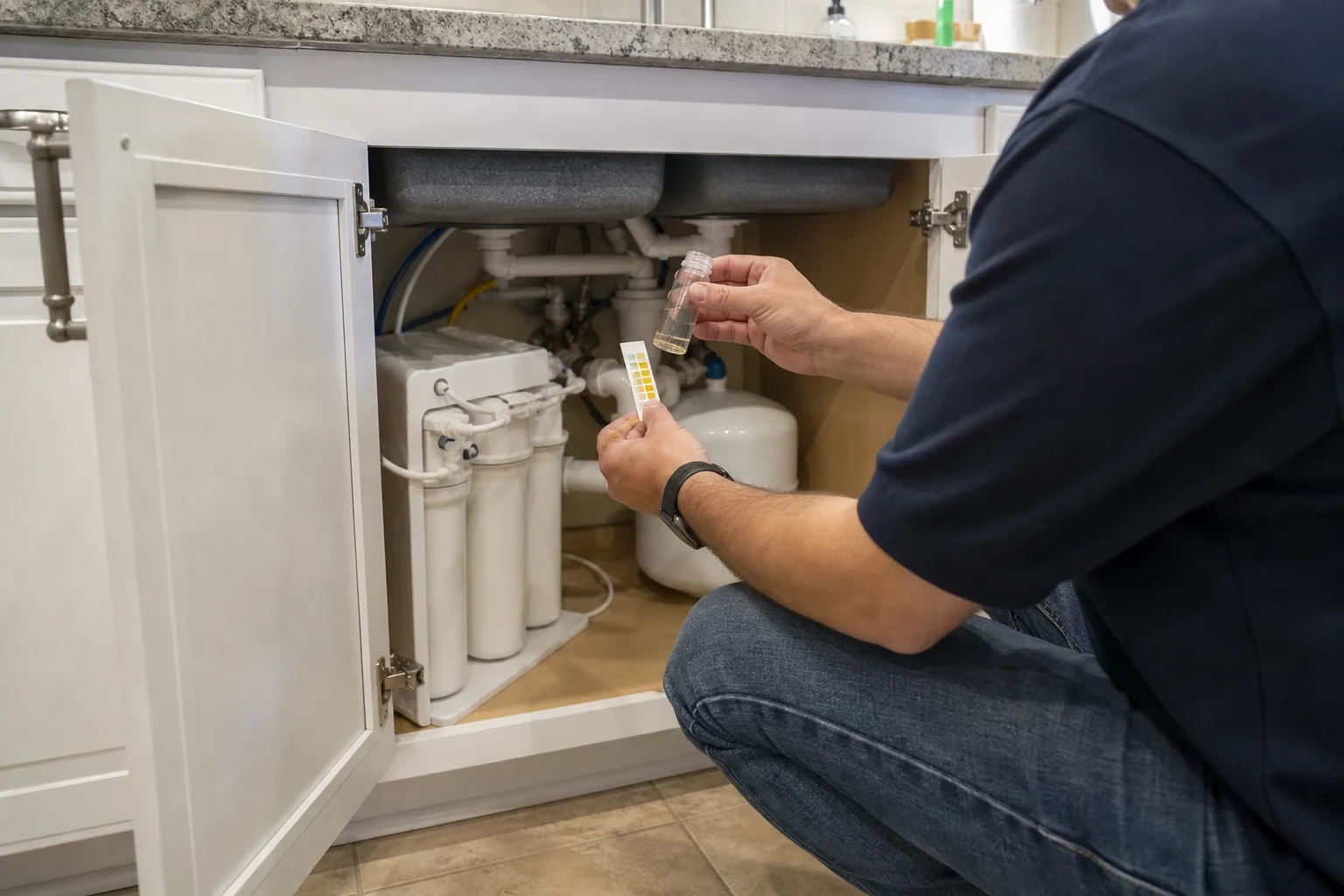
- We check clarity and hardness, because both affect how much light reaches the water. That tells us whether UV can work on its own or needs help upstream.
- Sizing to your flow rate
- A UV unit is rated for a certain number of gallons per minute. We size it to your home's peak use, like a shower and the washer running together, so water never rushes past the lamp too fast to be treated.
- A sediment prefilter
- Particles can shade microbes from the light. A sediment filter ahead of the UV chamber keeps the water clear and the sleeve cleaner between service visits.
- Point-of-entry placement with a bypass
- We install the system on the main line, after any other treatment, so every tap in your home gets treated water. A bypass valve lets you service it without shutting off the whole house.
- Controller setup and a walkthrough
- The controller warns you when the lamp is nearing the end of its life or loses power. Before we leave, we show you what the lights mean and how lamp and sleeve care works.
When UV treatment may make sense for you
A household member with a weak immune system
Babies, older relatives and anyone in medical treatment may react more to microbes. UV adds a barrier at every tap in the house, not only the kitchen.
Boil water notices make you nervous
These notices can come after line breaks or pressure drops during hard freezes. A running UV system treats water as it comes in, but official notices should still be followed.
You're putting in whole-home carbon
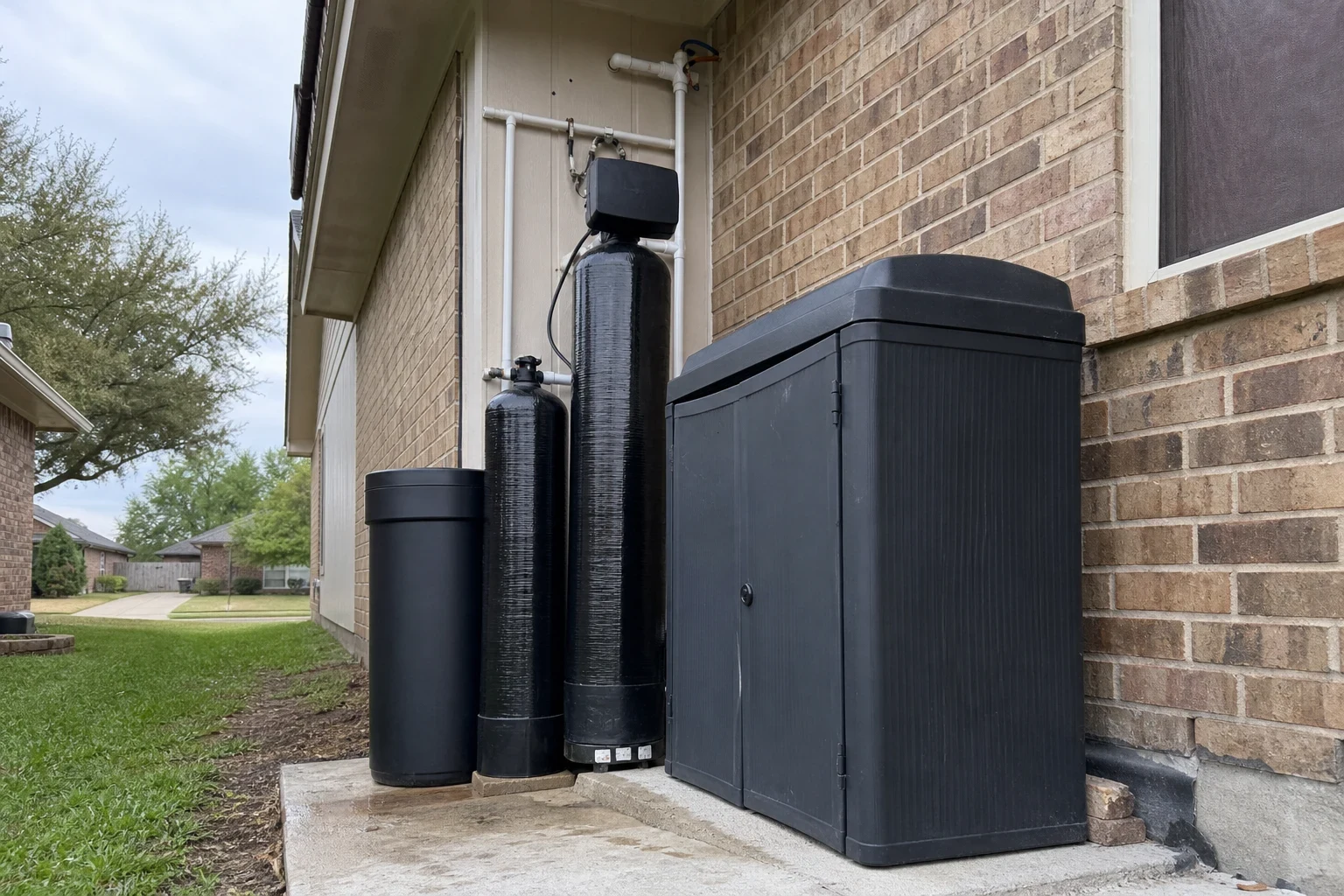
Carbon strips out chlorine, including the disinfectant that keeps working as water travels through your pipes. Adding UV after the carbon is a common, practical pairing.
Someone said UV fixes taste or smell
It doesn't. If the real issue is chlorine taste or a musty odor, we'll steer you to filtration rather than sell you equipment that misses it.
What drives the cost of UV treatment
Most of the price comes down to how much water your household uses and what treatment the water needs before it reaches the lamp. We check both, then quote, so you know what each part costs and why.
How much water flows at once
Homes with more bathrooms need a chamber and lamp rated for higher flow. A smaller unit is cheaper up front but can leave water undertreated during heavy use.
Pre-treatment before the UV
Clear, soft water might need only a sediment filter. If hardness could build up on the sleeve, a softener may be worthwhile, and we'll let you know if your results suggest it.
Location and access
A main line in an open garage is simpler to work on than one behind finished walls. Having an outlet nearby, or needing one added, also affects the job.
Ongoing maintenance
Plan on a new lamp roughly every year, a sleeve cleaning now and then and prefilter changes. We go over those costs with you before you decide.
How a UV installation goes
- 1
Talk it through by phone
Tell us what's prompting the question, who lives in the home and what other treatment you already have. We'll set a time to look at your water.
- 2
Check the water and the plumbing
We look at clarity and hardness, find where the main line enters, and confirm there's an outlet nearby for the controller. Then we explain what we'd recommend and why, in plain terms.
- 3
Installation day
Installations are handled by our installers, and we protect floors and work areas as we go. Water is off for part of the visit, and we'll tell you roughly how long before we start.
- 4
Startup and cleanup
We flush the lines, confirm the lamp is lit and the controller reads normal, and clean up the work area. You'll know when the lamp and sleeve should be serviced next.
UV treatment questions we hear
Will UV make my water taste better?
No. UV treats microorganisms only, so taste, smell and chlorine stay the same. If taste is your main concern, whole-home filtration or reverse osmosis is likely a better fit, and we'll say so when we look at your water.
Does a UV system use a lot of electricity?
The lamp draws about as much power as a standard light bulb and runs all the time. It does need to stay plugged in, because water passing through an unpowered unit isn't treated.
Do I need UV if my home is on city water?
Not always. City water is disinfected before it reaches you, so UV is an added layer rather than a requirement. It makes the most sense for sensitive household members, homes adding carbon filtration, or families who want a steady backup.
How often does the lamp need to be replaced?
Most lamps are replaced about once a year, even if they still glow, because their output fades over time. The controller will remind you, and we'll show you how to keep track.
Is installation included?
Standard professional installation included for qualifying homes. When we look at your plumbing, we'll tell you whether your setup qualifies and explain any extra work before anything is scheduled.
Find out if UV fits your water
A short call is enough to get started. We'll look at your water before recommending anything, so you only add UV if it truly helps your home.